Last update February 13, 2026
Konya is a city located in the Konya Province, within the Central Anatolia Region of Turkey. It lies on the Anatolian plateau and is one of the largest cities in Turkey by area. The city is notable for its historical heritage as the former capital of the Seljuk Sultanate of Rum. Konya has a continental climate, characterized by hot dry summers and cold snowy winters. The city serves as a cultural and religious center, especially known for its association with the 13th-century poet Rumi and Sufi mysticism.
Konya is one of Turkey’s most conservative cities. While very welcoming to tourists, it is respectful to dress modestly (covering shoulders and knees) when visiting the Mevlana district and mosques. Alcohol is not widely served in the city center, except in some international hotels.
Konya Overview
- Location: Central Anatolia, Turkey
- Primary features: Seljuk architecture, Sufi culture, Anatolian plateau geography
- Time needed: 2-3 days (minimum 1 day)
- Best time to visit: April to June (spring), September to October (autumn)
- Cost level: Low to medium compared to major Turkish cities
- Tourism profile: Cultural tourism, religious tourism, historical sightseeing
Reasons Travelers Visit Konya
- Rich Seljuk and Ottoman historical sites including mosques and mausoleums
- Center of Sufi culture and the Mevlana Museum
- Geographic location on the Anatolian plateau with surrounding steppe landscapes
- Local cuisine featuring traditional Central Anatolian dishes
- Important religious festivals and ceremonies linked to Rumi and Sufism
Best Time to Visit
The best time to visit Konya is during spring (April to June) and autumn (September to October). These periods feature moderate temperatures and lower precipitation compared to winter and summer. Summers are hot and dry, with temperatures often exceeding 30°C. Winters are cold and snowy, particularly from December to February, which may restrict some outdoor activities. Tourist crowds are moderate in spring and autumn, and lower during winter.
| Season | Months | Typical Weather | Crowd Levels |
|---|---|---|---|
| Spring | April–June | Mild, moderate rain, 10-25°C | Moderate |
| Summer | July–August | Hot, dry, 25-35°C | Low to moderate |
| Autumn | September–October | Cooling, less rain, 10-25°C | Moderate |
| Winter | November–March | Cold, snow common, -5 to 10°C | Low |
How to Get There
Konya is accessible via road, rail, and air transport. The city has its own domestic airport with regular flights from Istanbul and Ankara. It is connected to other major cities by intercity buses and Turkey’s high-speed train network. Road travel is possible via highways from nearby provinces, with travel times varying depending on the origin city.
- Konya Airport provides domestic flights
- High-speed train available from Ankara and Istanbul
- Intercity buses connect Konya with regional centers
- Car travel via major highways from nearby regions
From Istanbul
- Flight: Approximately 1 hour 10 minutes from Istanbul Airport to Konya Airport
- High-speed train: Approximately 4.5 to 5 hours
- Bus: Approximately 9 to 10 hours
- Car: Around 7 to 8 hours via D-750 highway (approx. 700 km)
From Izmir
- Bus: Approximately 8 to 9 hours
- Car: Around 7 to 8 hours via D-300 and D-330 highways (approx. 580 km)
- No direct flights or train connections available
From Antalya
- Bus: Approximately 6 to 7 hours
- Car: Around 5 to 6 hours via D-695 and D-330 highways (approx. 320 km)
- No direct flights or train connections available
From Ankara
- High-speed train: Approximately 1.5 hours
- Bus: Approximately 3 to 4 hours
- Car: Around 3 to 4 hours via D-140 highway (approx. 260 km)
Getting Around
- Public buses cover most urban areas and main tourist sites
- Municipal taxi services are widely available
- City center is walkable; distances between major sites typically 1-3 km
- Car rentals are available for travel outside the city
Top Attractions in Konya
Mevlana Museum
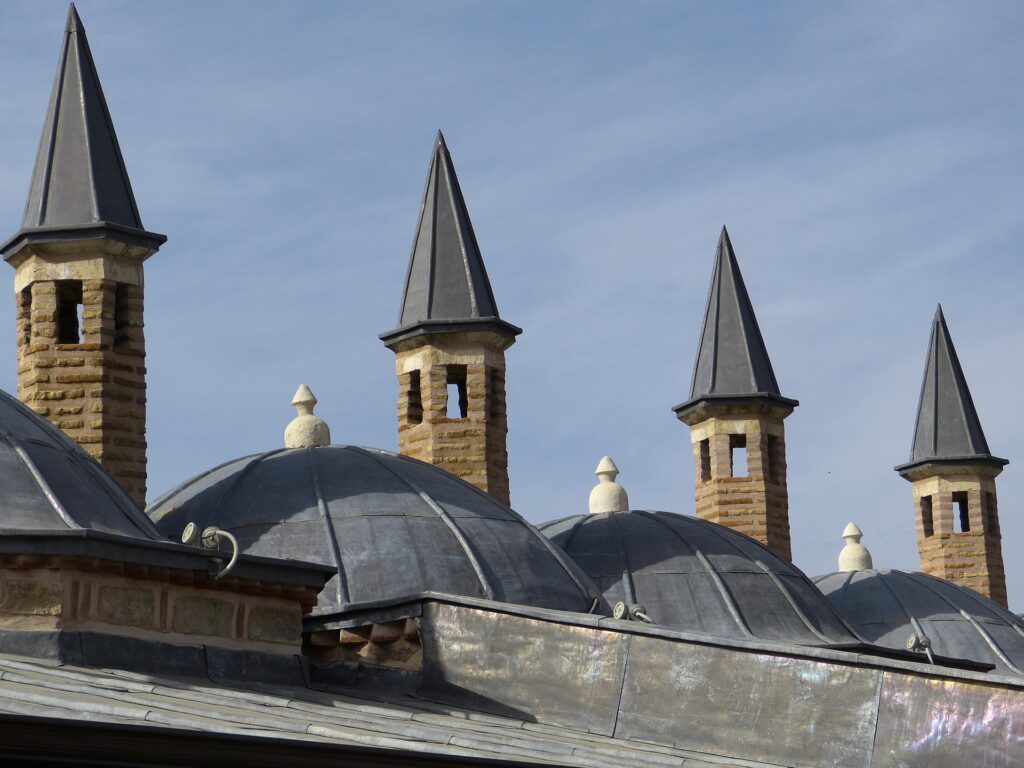
A museum dedicated to Jalal ad-Din Rumi, the 13th-century Sufi mystic. The site includes a mausoleum and Seljuk architecture. It is a religious and cultural museum. Average visit duration: 1.5 to 2 hours. Every Saturday night, the Mevlana Cultural Center hosts a large-scale Sema ceremony that is often free or very low-cost.
Alaeddin Mosque
Historical mosque built in the 12th century, showcasing Seljuk architecture. It serves as a functioning mosque and a significant religious site. Average visit duration: 30 to 45 minutes.
Karatay Medrese
A former theological school now functioning as a museum exhibiting Seljuk ceramics and tiles. Type: Museum and historical building. Average visit duration: 1 hour.
Ince Minaret Medrese
A 13th-century medrese known for its intricately carved stone minaret. It serves as an architectural monument and is used as a museum. Average visit duration: 45 minutes to 1 hour.
Sille Village
A historical village 8 km northwest of Konya, known for rock-cut churches and traditional stone houses. Attraction type: Heritage site and cultural village. Average visit duration: 2 hours.
Common Visitor Activities
- Visiting Mevlana Museum and attending the Whirling Dervish ceremonies
- Exploring Seljuk architecture in mosques and medreses
- Walking tours of Konya city center and historic districts
- Day trip to Sille Village and nearby historical sites
- Sampling Central Anatolian cuisine in local restaurants
- Etli Ekmek – Often described as “Turkish Pizza,” it is a long, narrow strip of thin dough (sometimes over a meter long) topped with minced meat, tomatoes, and peppers.
Suggested Konya Visit Duration
A half-day visit allows for seeing one or two main sites such as the Mevlana Museum and Alaeddin Mosque. A 1-day visit covers the primary city attractions including museums and medreses. A 2 to 3-day stay enables deeper exploration of the city, nearby villages like Sille, plus attendance of cultural events and local culinary experiences.
Nearby Destinations
- Konya Province villages and natural sites; within 10-50 km
- Cappadocia region; approximately 3 hours by car (230 km)
- Karaman city; approximately 1.5 hours by car (110 km)
- Ankara, the capital city; approximately 3 hours by car (260 km)
Practical Information
| Climate | Continental, hot dry summers, cold snowy winters |
|---|---|
| Seasonality notes | Spring and autumn have moderate weather; winters are cold; summers are hot and dry |
| Crowd levels | Moderate in spring and autumn, lower in summer and winter |
| Constraints or limitations | Winter snow can restrict transport; long distances between some attractions; some religious site hours may vary |
Frequently Asked Questions
What type of travelers visit Konya?
Konya mainly attracts cultural tourists, religious travelers interested in Sufism and Rumi, history enthusiasts exploring Seljuk architecture, and food travelers sampling Central Anatolian cuisine. Visitors often seek non-coastal urban destinations with historical and religious significance.
How many days are needed to see Konya?
A minimum of one full day is needed to visit the main sites like Mevlana Museum and Alaeddin Mosque. Two to three days are recommended to cover additional museums, historical neighborhoods, and nearby attractions such as Sille Village.
Is Konya safe for travelers?
Konya is generally considered a safe city for travelers, with low crime levels. Usual travel precautions should be followed, including safeguarding belongings and using licensed transportation. Religious sites may have specific dress code requirements to respect.
What is the best time to visit Konya?
The best time to visit Konya is spring (April to June) and autumn (September to October) when temperatures are moderate and precipitation is low. Summers are hot and dry; winters are cold with possible snow that can affect travel.
PLAN YOUR JOURNEY BY DESTINATION
Get detailed travel guides for Turkiye's most popular regions, including the Mediterranean coast, Cappadocia, Istanbul and more. Each guide is packed with local insights, recommended routes and practical tips to help you explore like a local.